


Lately, I’ve been returning to classic fiction, particularly books I somehow never got around to reading the first time. Audiobooks have made this considerably easier, allowing me to spend time with writers whose work has survived generations of changing literary tastes, social conventions, and intellectual fashions.
There’s another reason for this return to the classics. In an era when artificial intelligence can produce a passable novel in minutes, I’ve become increasingly suspicious of contemporary authorship. I don’t necessarily distrust contemporary writers themselves, but I find myself wondering how much of what I’m reading has actually emerged from another human consciousness. As someone who writes both fiction and nonfiction, I find that question increasingly difficult to ignore.
There’s something reassuring about encountering a voice from another century, knowing that whatever its limitations or prejudices, it emerged from an actual person wrestling with the world as they experienced it. Tolstoy had no language model to help him organize his thoughts, smooth his prose, or synthesize the prevailing intellectual currents of his time. His contradictions belong to him.
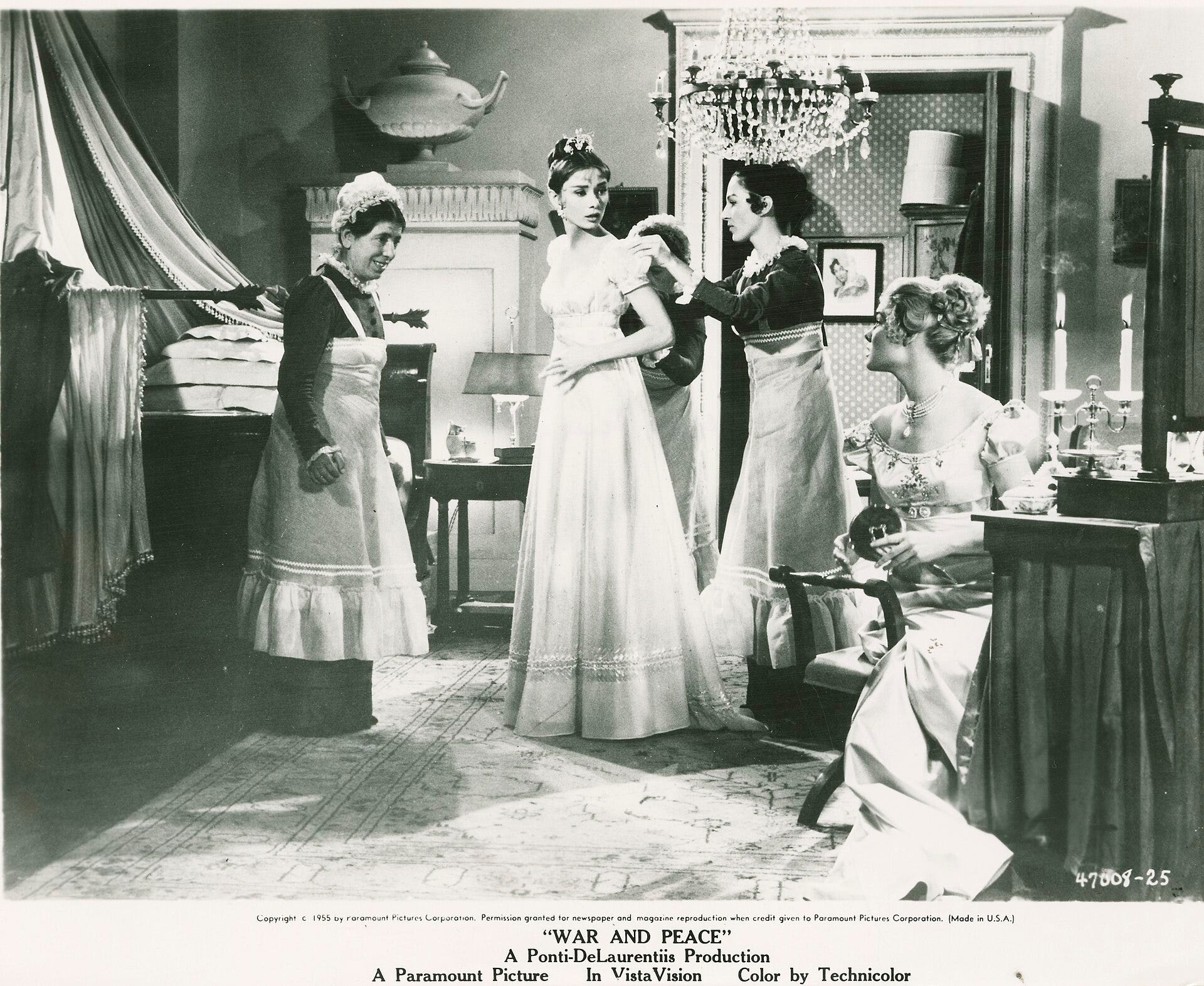
I’ve been listening to War and Peace (beautifully narrated by actor Thandiwe Newton; the Tolstoy-approved Maude translation), and one of the things that has struck me is how much the author’s underlying philosophical orientation resonates with my own. I’ve long been interested in the relationship between science and spirituality, particularly the tendency to treat them as opposing systems of knowledge. Tolstoy’s own spiritual questioning, along with his eventual rejection of institutional religious authority, reflects a tension I recognize.
I have little patience for religious dogma, particularly when it claims authority over experiences that are deeply subjective and personal. Yet I find an equally troubling rigidity in certain expressions of scientific materialism, where the limits of existing measurement are treated as the limits of what can meaningfully exist.
As a psychologist, I value science enormously. My professional life has been shaped by empirical inquiry, and I’m fascinated by what neuroscience and psychology continue to reveal about consciousness. But science is a method of inquiry, not an ideology, and I become uneasy when its current models are elevated into unquestionable descriptions of reality.
I find myself similarly uncomfortable with dogmatic atheism, particularly when it reproduces the very intellectual authoritarianism it claims to reject. Replacing religious certainty with scientific certainty doesn’t necessarily represent an advancement in how we think. Sometimes it merely relocates the source of authoritarianism.
There’s also a historical dimension to this that deserves attention. Both institutional religion and institutional science developed within hegemonic cultures that systematically marginalized minorities’ and women’s participation and authorship. The spiritual experiences of the non-dominant “others” have often been dismissed, pathologized, or subjected to the interpretations of religious authorities. Scientific contributions have likewise been excluded, appropriated, or undervalued.
This history makes me especially wary of institutions claiming exclusive authority over human knowledge. Who gets to decide what constitutes legitimate experience? Who is permitted to interpret it? And how much of what we call objective truth has been shaped by the social arrangements that determined whose observations were taken seriously?
These questions have been occupying me for years, and increasingly they have found their way into my writing and clinical work.
In Unsplit Your Mind, the nonfiction book I’m developing, I’m exploring how the human tendency to divide experience into opposing categories can restrict our capacity to perceive and understand reality. Science versus spirituality is one example. Rationality versus intuition is another. We organize our thinking around these distinctions, often without noticing how much they constrain the questions we’re willing to ask.
My growing interest in trance has added another dimension to this inquiry.
For much of my life, I’ve been fascinated by the extraordinary variability of human consciousness, including states that are often dismissed as imagination, fantasy, or departures from ordinary rational awareness. Yet imagination itself is one of the most remarkable capacities of the human mind. We use it to anticipate the future, revisit the past, understand other people, generate scientific hypotheses, and conceive of possibilities beyond our immediate circumstances.
Through my work with Ericksonian hypnosis and other experiential approaches to psychotherapy, I’ve become increasingly interested in what happens when we intentionally shift the quality of our attention. Sometimes a problem that appears insoluble within one state of mind becomes surprisingly fluid in another. A rigid opposition can give way to a more complex understanding in which apparently contradictory experiences coexist.
I’ve begun calling this evolving approach Conscious Trancework, a way of working intentionally and soberly with shifts in consciousness, imagination, embodied experience, and psychological flexibility.
What interests me most is the possibility of moving beyond the familiar either/or structures through which we habitually interpret ourselves and the world. This doesn’t require abandoning critical thinking. Indeed, I think the capacity to question our own assumptions becomes even more important when exploring subjective experience.
Perhaps that’s part of what I’m finding so refreshing about spending time with Tolstoy. His writing emerged from a period of enormous intellectual and cultural upheaval, when longstanding religious and political institutions were being challenged by new ways of understanding society, human nature, and the material world. At times, I find myself surprised by just how strongly many of his observations land for me. Truly, many of the tensions he explored remain unresolved.
I’m also struck by the peculiar experience of encountering these questions through fiction (though Tolstoy famously said of the book: “not a novel, even less is it a poem, and still less a historical chronicle.”—and to me, this genre-defying conceptualization adds yet another layer of fascination). A novel can hold contradictions without requiring us to resolve them prematurely. It allows us to inhabit multiple perspectives, including those we might ordinarily reject. In that sense, reading fiction can itself become an exercise in psychological flexibility, an opportunity to loosen the grip of our habitual interpretations.
And perhaps that’s another reason I feel drawn toward these older works right now. At a time when we’re increasingly surrounded by synthetic language, algorithmically selected information, and technologies designed to anticipate, shape, and validate our attention, I want to spend more time inhabiting the imaginative worlds of people who had to find their own way through uncertainty.
I suspect there’s a relationship between that desire and my growing commitment to exploring consciousness more deliberately. Both involve reclaiming some agency over where our attention goes, how we interpret experience, and which possibilities we allow ourselves to entertain.
In the meantime, I’m enjoying the strange pleasure of having a nineteenth-century Russian novelist accompany me through my twenty-first-century life, provoking questions that feel remarkably contemporary.