


There are moments when I still feel startled by the fact that I am actually doing this.
As a Filipina hapa growing up working-class in 1970s and 80s Los Angeles, I disappeared into speculative fiction and graphic novels (made possible by elder brother Ken’s copious collection, thank you). Those books felt like portals. They stretched reality. They suggested that consciousness itself could expand beyond the limits of ordinary life. I would read them and feel something open inside me. Awe. Possibility. Escape. Recognition.
I wanted desperately to become one of the people capable of creating that feeling in others.
A writer.
Someone whose words could alter the atmosphere inside another person’s mind.
Yet even now, after publishing stories, after writing countless words, after building fictional worlds and preparing my first print anthology, some part of me still struggles to believe I belong in that category.
I can say the words “I’m a writer,” but another layer of me hesitates. Watches. Waits for correction.
The feeling fascinates me because externally, the evidence is already there. I write constantly. I revise obsessively. I publish. I build stories that speak to each other across consciousness frameworks and outer realities. I think about legacy and voice and meaning. These are the actions of a writer.
Still, there remains a strange emotional distance between what I am doing and what I feel permitted to claim. I tell myself it will take time to grow into it, the feeling. Like how I didn’t instantly feel comfortable being called Dr. Valderrama. Or like trying on an outfit your friends insist looks great on you, but you’re just not sure yet.
Lately I have been wondering if part of this comes from childhood.
When you grow up marginalized—racially, economically, emotionally—you often learn to keep certain parts of yourself hidden. Intelligence becomes private. Imagination becomes survival territory. Observation sharpens because it has to. Creativity develops underground.
As a little brown girl moving through environments where I often felt unsafe, dismissed, or vulnerable, I did not absorb the idea that my inner world was meant to shape culture. I did not assume my thoughts deserved amplification. I did not imagine that my consciousness would someday matter publicly.
The writers I loved seemed almost mythological to me.
Authorized. Funny how that word is like a pun.
I hadn’t realized until recently that I was deifying them in some way. As though they belonged to a special class of humans permitted to speak reality into existence.
Children rarely imagine artistic creators as frightened or uncertain people. It’s why I’ve found myself fascinated by contemporary analysis of the Renaissance by Ada Palmer and others—to suddenly see these historical figures as flawed, ambitious human beings rather than simply legends. It’s also why I am struck whenever I see colorized photos from the old times—how time and space suddenly telescopes back into the eternal now. There is no ‘over there.’ There is only here.
We encounter finished works, not the messy human process behind them. We do not see the fear and insecurities, the unfinished drafts, the financial stress, the years of obscurity, the daily mundanities or the private terror that often accompanies creation.
We see the artifact and assume the creator must have always known they belonged. Then one day, if we become creators ourselves, we discover something disorienting. That the people who make culture are still just people.
Many of them carried enormous doubt. Many felt like imposters. Many came from backgrounds where they were never reflected back as important, intellectual, visionary, or powerful. I think this becomes even more complicated when the work is deeply tied to consciousness and identity.
I do not write merely to entertain. I write because I am trying to explore perception, trauma, systems, emergence, reality, longing, fragmentation, transcendence. To publish work like that carries emotional weight. Somewhere deep inside, it can feel like making a forbidden declaration: My inner world deserves space in shared reality.
For someone shaped by shame or invisibility, that can feel almost dangerous. And yet I continue. I know that matters.
I continue through uncertainty. Through self-doubt. Through the strange unreality of seeing my own written works exist in the world.
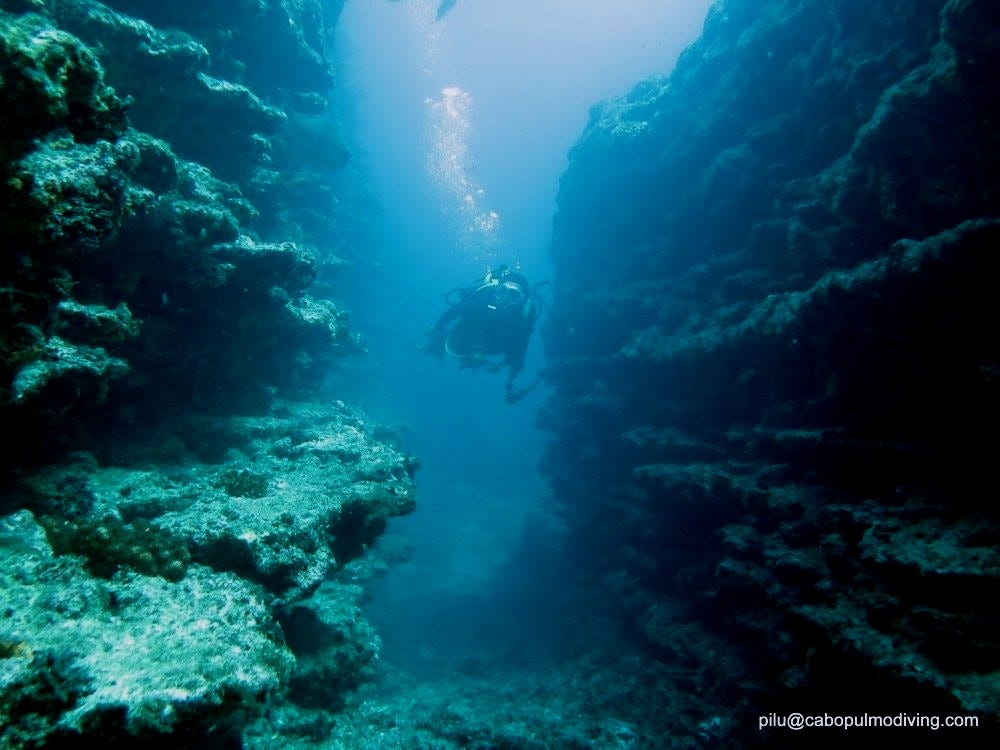
It’s like diving through water so black, you can’t even see your hand in front of you—yes, I’ve done that and it takes trust and guts and perhaps a kind of alien non-attachment.
What helps me more than anything is my relationship with myself and all the parts that make up me. I believe working on that has been so essential. To build that inner sanctum. To build trust with oneself. And like any relationship, that trust is earned over time and repeated encounters that provide evidence to back it up. So the cycle has to start somewhere, at some point.
Sometimes I think the nervous system lags behind external reality. A person can change their life long before their deeper identity structures catch up. Maybe that is part of what I am experiencing now.
The child who once looked at authors with reverence still lives somewhere inside me, still staring upward at some imagined gate of permission. Meanwhile the adult version of me is already sitting alone at the desk doing the work.
Writing the stories. Conjuring worlds. Sending them out like seeds in the wind. The tree has done its job, pumping energy into those seeds. What happens after is up to the larger forces of creation.
Like all processes, becoming a writer is not a single moment of arrival. These days, I am feeling into the part of it that is about allowing yourself to believe. To feel safe. Because nobody owns it. And everyone belongs.
To stop treating your own voice as trespassing. To start treating it as an honored guest. Yes, we all have a place at the table.